Commentary, Opinion, Idea Articles

Myanmar’s Earthquake Exposes Political Fault Lines

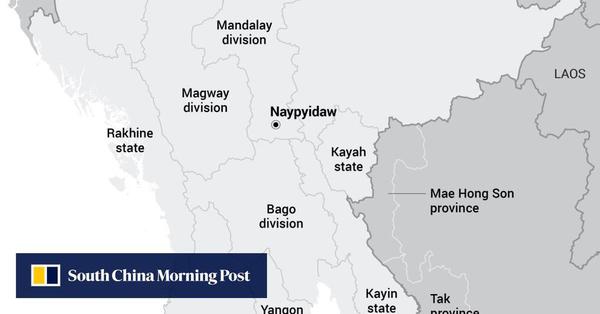
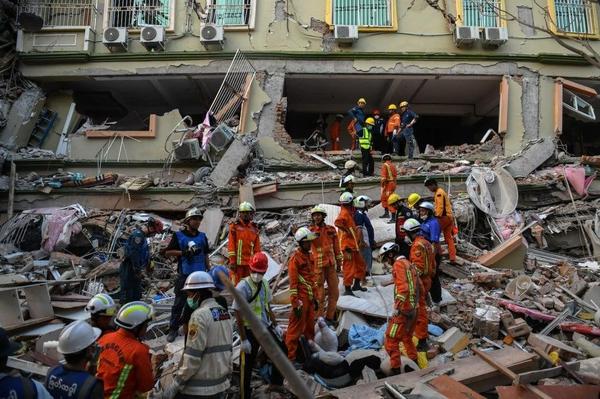
In the hours after the deadly 7.7 magnitude earthquake, the streets of Mandalay and Sagaing—not far from the epicenter—resembled a war zone. Survivors clawed through debris to free loved ones, with virtually no sign of help from authorities. Myanmar’s capital, Naypyidaw, along with the Mandalay and Sagaing regions were the hardest hit. The death toll in Myanmar surpassed 3,600 people by April 7 and was still climbing as rescue efforts began winding down last week.
New Battlefront Emerging in Western Myanmar

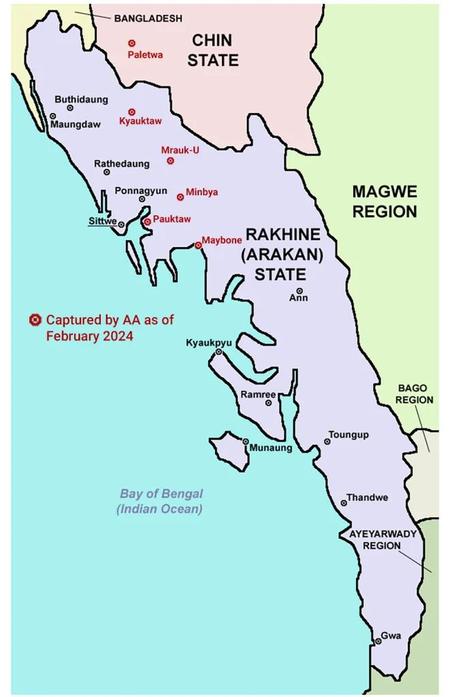
The Arakan Army (AA) has gained significant ground against State Administration Council (SAC) troops in western Myanmar. The AA’s gains compound SAC losses in other parts of the country since Operation 1027 in October.

A new battlefront has opened up in western Myanmar. Just weeks after the Operation 1027 offensive against junta forces in late October, the Arakan Army (AA) has chalked up a string of territorial gains against State Administration Council (SAC) forces in Rakhine State. The gains

Is Myanmar’s Civil War Pushing the Country Toward Fragmentation?

Resistance forces now face the challenge of building an ethnically inclusive and democratic state, something that no government in Myanmar has ever achieved.

Today, Myanmar stands at a critical juncture in its history. The escalating losses of the Myanmar military due to the coordinated attacks by resistance forces and ethnic armed organizations (EAOs) throughout the country have ignited a pivotal debate, both nationally and internationally, about the country’s future trajectory. Is Myanmar heading toward Fragmentation and Chaos?

Ceasefire Breach: Operation 1027 Shakes Western Myanmar

On November 13, about 18 days after its inception, Operation 1027 opened a new front in western Myanmar, breaking a year-long informal ceasefire with the Myanmar military. The initial attack was carried out by the Arakan Army (AA), which attacked at least two junta outposts in northern Rakhine State. Operation 1027, which has made rapid gains in northern Shan State and has since expanded to other areas of the country, has now reached the previously quiet west of Myanmar. This expansion presents

‘Operation 1027’: A Turning-Point For Myanmar’s Resistance Struggle?

For the past two years, a string of significant global events, including the Taliban reconquest of Afghanistan, the Russia-Ukraine war, and the Israel-Hamas conflict, have diverted international attention from Myanmar’s turmoil and the Myanmar people’s struggles for democracy. Despite the lack of attention, however, the self-defense efforts of the Myanmar people have highlighted the military’s complete incapacity to consolidate the coup d’etat that it launched in February 2021.

How the Arakan Army Has Capitalized on Myanmar’s Coup

Myanmar’s Rakhine State, which borders Bangladesh to the west, is now relatively stable despite the country’s escalating countrywide civil war, under de facto control of the Arakan Army (AA), one of the country’s most powerful ethnic armed groups. Established in 2009 with its political goal of greater autonomy for the people of Rakhine, the AA claims that it now has 30,000 people under arms, around 6,000 of which are supporting its ethnic allies and resistance groups in Kachin, Karen, and Shan states and elsewhere in country.

2023/35 "Myanmar’s “Sham” Election Threatens the 2025 Goals of the Arakan Rebels" by Kyaw Hsan Hlaing

• After fighting the Myanmar military fiercely for two years, the Arakan Army had, by the end of 2020, established a parallel administration and military bases in Rakhine State. It seemed that “Arakan Dream 2020” was thus accomplished.
• While the relationship between the Rakhine political parties and the United League of Arakan/Arakan Army (ULA/AA) is not clear, the ULA/AA leadership seems to have much closer interactions with the Arakan National Party (ANP) than with the Arakan League of Democracy and Arakan Front Party.

Understanding the Arakan Army • Stimson Center

On February 1, 2023, the brutal military in Myanmar marked two years since its seizure of power from the civilian government in 2021. Since then, the country has been plagued by escalated civil war and political and economic turmoil. It is critical to end the military regime in Myanmar for all ethnic groups, especially the ethnic armed revolutionary groups taking the significant role of supporting and fighting alongside the resistance groups across the country.

Myanmar's ethnic insurgents raise the pressure on military junta

The day her 4-year-old grandson was killed, U San Yee had taken him to their local market in rural Myanmar for sticky rice and his favorite fried banana snacks before coming home to play with his toy cars.

“We didn’t know that the Myanmar military would fire artillery shells,” U San Yee said. “That’s why we were just going about and living our normal lives.”

When the first explosions struck Kin Seik, a farming village of about 3,000 people, the two were watching “Tom and Jerry” cartoons.

Japan needs to ratchet up pressure on Myanmar's junta

On Sept. 16, about two months after intensified armed clashes resumed in Myanmar between the state military and the Arakan Army in Rakhine and the southern Chin States, the military regime blocked the United Nations and international humanitarian organizations from accessing six townships, despite the severe humanitarian need.

Two weeks later, the junta further restricted the supply of medicine from Yangon to Rakhine State while at the same time arresting at least two medical doctors.

Shadowy pro-military militias target Myanmar’s anti-coup movement

A month ago, the body of a man was found dumped by the side of the road in Myanmar’s central city of Mandalay.

The victim had been stabbed multiple times, and his hands tied behind his back.

Attached to a lanyard around the neck of National League for Democracy (NLD) member Zaw Gyi the killers had left their calling card: a red circle depicting a warrior holding two swords.

The circle is the symbol of a new pro-military death squad terrorising Myanmar called Thway Thauk Apwe, which roughly tr

My Family and Friends Are Living Under the World's Longest Internet Shutdown in Myanmar

Kyaw Hsan Hlaing grew up in Myanmar’s conflict-torn Rakhine State where his family and friends are among more than 1.4 million people affected by a prolonged internet ban. In place since June 2019 in parts of Rakhine and neighboring Chin State, the ban was imposed by the government amid escalating fighting with an ethnic armed group. Human rights groups have criticized the shutdown for hampering access to information about COVID-19, as well as making it harder to distribute food and medical aid...

Facebook is still censoring groups fighting the military coup in Myanmar

Nyo Twan Awng was an early adopter of Facebook in Myanmar. A doctor, he joined the social network in 2013, and said he used it to source medical information, as well as to share his poems and articles about art and literature. Alongside his artistic pursuits, he ran another channel: the Arakan Army Info Desk, a propaganda stream for the Arakan Army (AA), an armed group fighting for self-determination in Myanmar’s western Rakhine state.

As the AA’s conflict with the national military, known as t

Democratic states should recognize Myanmar's National Unity Government

Fuadi Pitsuwan is a pre-doctoral fellow at the School of Public Policy in Thailand's Chiang Mai University and a son of the late Surin Pitsuwan, former ASEAN secretary-general (2008-13). Kyaw Hsan Hlaing is a researcher and independent journalist from Myanmar's Rakhine State.

Just days after Myanmar's junta chief met leaders of the Association of Southeast Asian Nations in Jakarta and agreed to their call to halt violence in the country, reports of fatal attacks on at least six protesters indic

Global Norms Are Under Attack in Post-Coup Myanmar

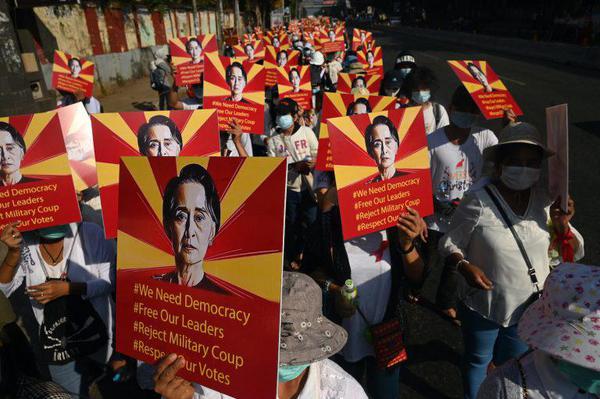
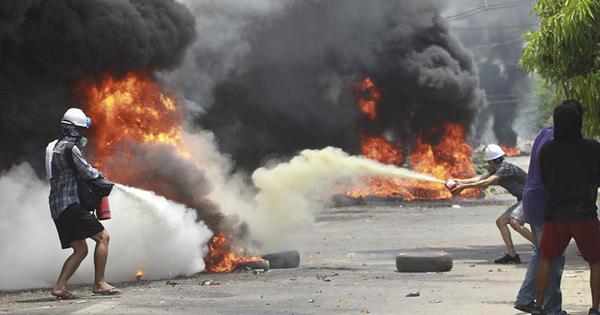
With Myanmar’s post-coup crisis dragging into its third month, security forces commanded by the coup leader Sen. Gen. Min Aung Hlaing show no sign of abating in their brutal suppression of the anti-coup protests that have erupted across the country since early February. Despite their massive numbers, protestors have been highly disciplined and peaceful. It was only after the security forces began using excessive and lethal force that a small pocket of them resorted to handmade weapons such as Mo

After Myanmar’s Military Coup, Arakan Army Accelerates Implementation of the ‘Way of Rakhita’

On March 11, 39 days after Myanmar’s military seized power from the civilian government, it removed a terrorist designation from the Arakan Army (AA), an ethnic armed organization in the country’s westernmost Rakhine State, with which it had been engaged in violent conflict for most of the past two years. While many ethnic Rakhine people welcomed the step, many from the Bamar majority accused the AA of collaborating with the junta and blamed the Rakhine people. This response highlights a longsta

Covering the Coup: A Myanmar Journalist Reports

Chronicling events on the ground in Yangon, Arakanese freelance journalist Kyaw Hsan Hlaing documents an increasingly perilous situation for journalists in the wake of the military coup.

When my roommate woke me early on 1 February with the news that the Myanmar military had staged a coup, I knew that as a freelance journalist focused on human rights I could become a target.

I deactivated my Facebook account and requested the editor at an international news agency delete my byline from some se

Protests Unite Myanmar’s Ethnic Groups Against Common Foe

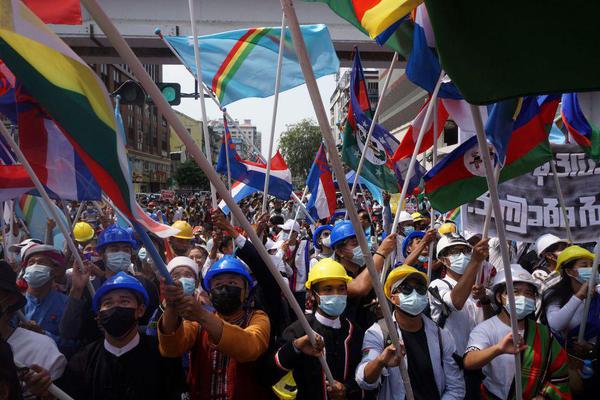
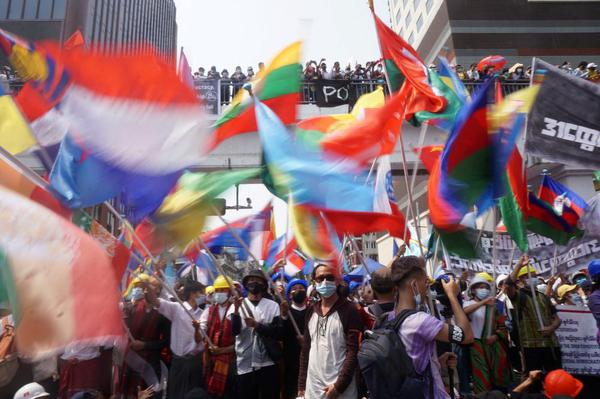
Myanmar’s military, known as the Tatmadaw, has killed at least 510 people and detained more than 2,500 others since it took power on Feb. 1. Now terrorized by the military themselves, many people from the Bamar ethnic majority are developing a sense of solidarity with the country’s numerous minority groups. Public apologies for years of indifference and denial of minority people’s experiences have proliferated. “We have learned day by day, and our point of view has changed. We feel really sorry,

Myanmar forces reportedly kill over 110 civilians in deadliest day since coup

Fears that Myanmar’s military would launch a brutal crackdown to mark Armed Forces Day were realized Saturday when security forces reportedly killed more than 110 people across the country in the bloodiest massacre since the army seized power in a coup last month.

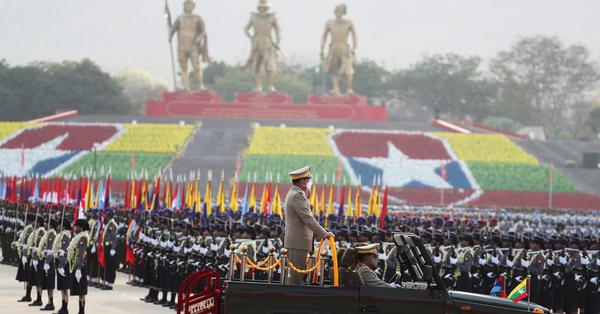
While soldiers paraded on the empty streets of the isolated capital, Naypyidaw, in front of dignitaries from countries including Russia and Thailand, security forces across the nation gunned down scores of unarmed protesters and passe

The Myanmar Military is Trying to Divide and Terrorize the People. We Must Resist.

Since seizing power on February 1, Myanmar’s military has inflicted terror across the country. As a youth, seeing my country fall under military rule is not only psychologically disturbing, but crushing when I consider the potential impact on my future and that of my generation.

Military and police forces have shot dead more than 200 people as of March 16. Soldiers are firing teargas, water cannon, and slingshots at protesters and beating people up, while some have been tortured. At night, they

Myanmar politics must be re-made, not restored

The growing democracy movement needs to look beyond Aung San Suu Kyi and the NLD, and listen closely to ethnic voices.

On the morning of February 1, my hopes disappeared when I learned that the civilian government had been overthrown in a military coup. Growing up under army rule, I did not have access to quality education or healthcare, and couldn’t use the internet until 2014. Terrified of the military, my parents always warned me to stay away from politics or activism. Now, I don’t want the

In Myanmar, one blackout ends, another begins

Early on the morning of February 1, Myanmar’s military seized power from the civilian government led by Aung San Suu Kyi, but Swe Pann, a university student in the country’s westernmost Rakhine state, didn’t know until more than a day later.

“I couldn’t access the internet, so I didn’t have much information,” says the 22-year-old. “It felt like a normal day.”

For the past 18 months, Swe Pann was living under the world’s longest internet shutdown, a near-total internet blackout across much of R